
CONTRACT WAREHOUSING
Your Space
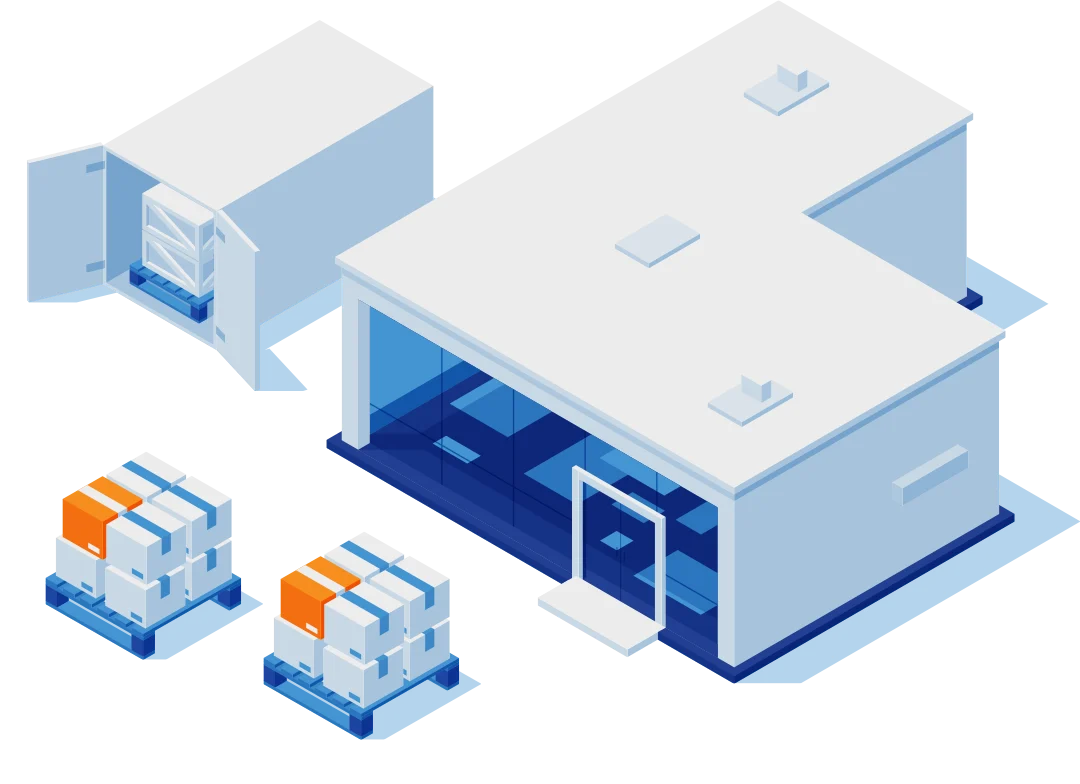
Contract Warehousing Services
BWT’s Contract Warehousing programs give you a defined block of space and a dedicated team inside a BWT facility under a fixed-term agreement — your racking layout, your processes, your service levels, and a known cost per month, without the capital outlay of a building or the risk of a commercial lease. We design the slotting, configure the warehouse management system to your item master, hire and train the crew that runs your account, integrate to your ERP by EDI or API, and report against the KPIs you set. You get the control of a private distribution center with the flexibility, labor pool, and multi-market footprint of a 3PL.
- Dedicated Space & Racking
- Dedicated Labor & On-Site Supervision
- Fixed-Term, Fixed-Rate Agreements
- Custom Slotting & Layout Design
- WMS Configuration & EDI / API Integration
- Inventory Management & Cycle Counting
- Order Fulfillment, Pick & Pack
- Kitting, Labeling & Value-Added Services
- FDA-Compliant, Climate-Controlled Space
- Lot, Serial & Expiration Date Control
- Inbound & Outbound Transportation Management
- KPI Reporting & Quarterly Business Reviews
Contract Warehousing — Frequently Asked Questions
BWT’s Contract Warehousing programs deliver measurable financial and operational benefits such as: converting warehouse capital expense into a predictable operating cost, removing the ten to fifteen year liability of a building lease, opening a new distribution market in weeks rather than quarters, moving hiring, training, turnover, and workers’ compensation exposure onto BWT’s books, and holding a single partner accountable to service levels instead of coordinating a landlord, a staffing agency, and a software vendor. The questions below cover how the programs are structured and run.
1. WHAT IS CONTRACT WAREHOUSING?
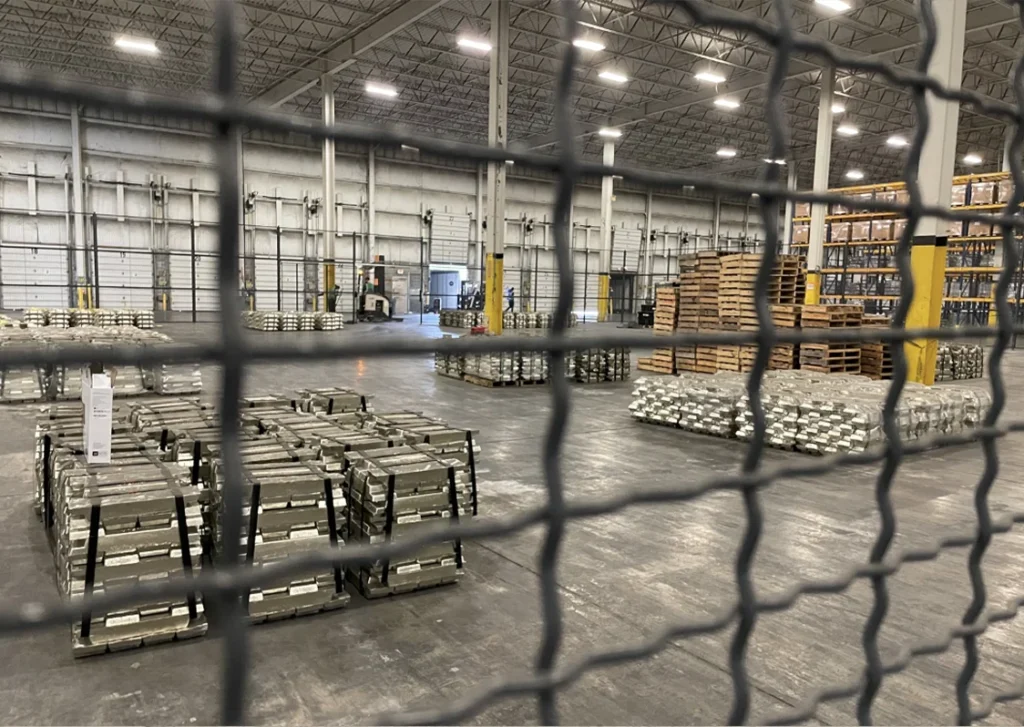
Contract warehousing is a long-term agreement in which BWT dedicates a defined amount of space and a defined team to a single customer for an agreed term at an agreed rate structure. You are not buying storage by the pallet as it fluctuates month to month — you are committing to a footprint, and we are committing to the space, the equipment, the people, and the service levels that go with it.
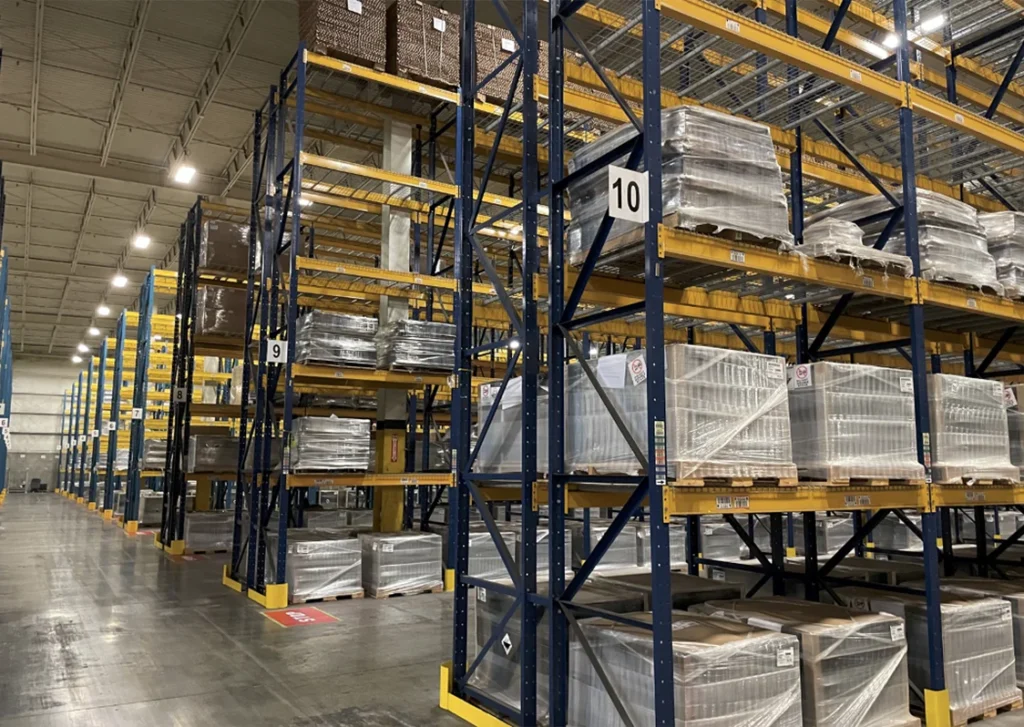
In practice that means a walled or clearly bounded area inside one of our facilities, racking configured to your product profile, a warehouse management system set up against your item master, a supervisor and crew who work your account and no one else, and a rate that is built from the real cost of running your operation rather than a published tariff.
2. HOW IS CONTRACT WAREHOUSING DIFFERENT FROM MULTI-TENANT OR ON-DEMAND WAREHOUSING?
Multi-tenant and on-demand warehousing share space, equipment, and labor across many customers. You pay for what you use, you can leave when you like, and in exchange you accept shared priorities at peak, standardized processes, and rates that move with the market. It is the right answer for variable volume, a market you are testing, or an overflow position.
Contract warehousing reverses that trade. You commit to a term and a footprint; in return you get dedicated space that no one else draws down, a crew trained only on your product, processes built to your specification rather than ours, and a rate locked for the life of the agreement. It is the right answer once volume is predictable enough that dedicated capacity costs less than buying it on the spot market — and once your service levels are specific enough that shared processes no longer meet them.
3. HOW LONG IS A BWT CONTRACT WAREHOUSING AGREEMENT?
Most agreements run one to three years, with three years being the point at which we can amortize racking, material handling equipment, and system configuration into a lower monthly rate. Shorter terms are available where the capital investment is light — for example a program that runs on existing racking in a standard configuration.
Agreements include an agreed notice period, a defined process for rate review tied to volume and wage movement rather than an open escalator, and an exit plan written at the start covering inventory transfer and system disengagement. We would rather agree how a program ends before it begins than negotiate it under pressure later.
4. HOW IS CONTRACT WAREHOUSING PRICED?
Pricing is built from the operation, not from a tariff. A typical structure has a fixed monthly component covering the dedicated space, racking, equipment, systems, and management overhead, plus a variable component covering the transactional work — receiving, putaway, picking, packing, loading, and any value-added services — priced per unit of activity.
That split is deliberate: the fixed side gives you a number you can budget against, and the variable side means you are not paying full freight in a slow month. To build a quote we need your monthly inbound and outbound volumes, order profile and line counts, SKU count, pallet positions required, storage profile including any temperature or regulatory requirement, seasonality, and the service levels you are held to by your own customers.
5. HOW MUCH SPACE DO I HAVE TO COMMIT TO, AND WHAT HAPPENS IF I OUTGROW IT?
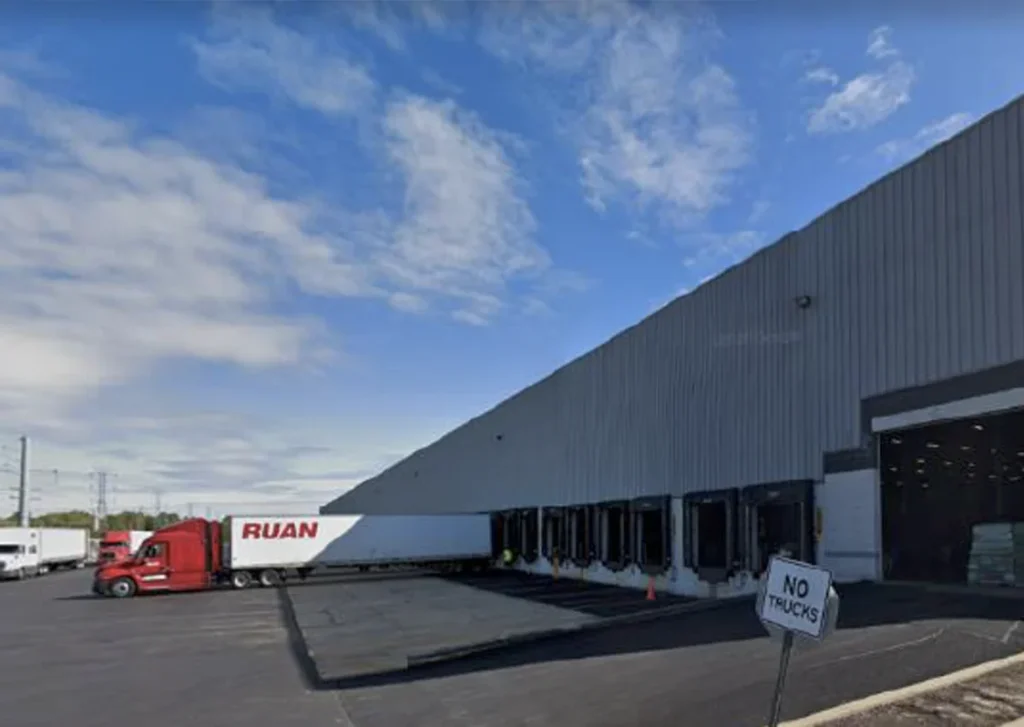
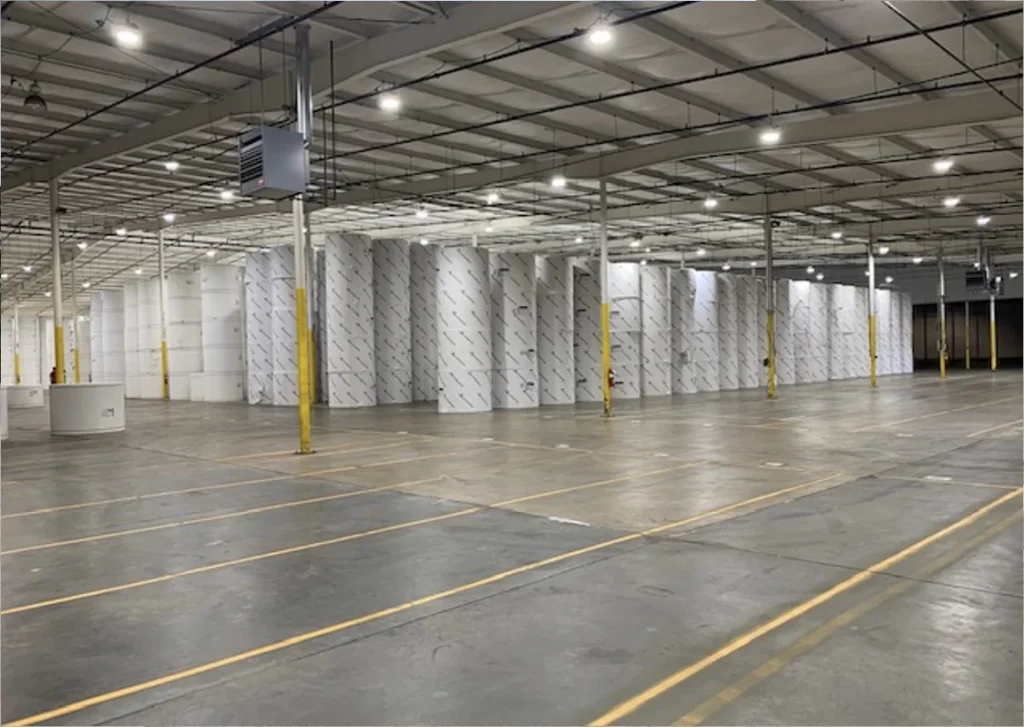
There is no fixed minimum. Programs typically start around 20,000 square feet, which is roughly the point where dedicated space and dedicated supervision become more economical than buying storage by the pallet. Our facilities range from 69,000 square feet in Kings Mountain, North Carolina to 240,000 square feet of climate-controlled space in Huntington Park, California, so a program can grow substantially without changing buildings.
Growth is handled two ways. Contracted space can be expanded by amendment where the building has room, and short-term surges — a promotion, a seasonal build, a container that arrived early — can spill into adjacent multi-tenant space at overflow rates rather than forcing you to contract for peak volume you only need eight weeks a year. Tell us your seasonal curve during design and we will size the committed footprint to the base, not the spike.
6. WHO STAFFS THE OPERATION, AND CAN THE TEAM BE DEDICATED TO MY ACCOUNT?
BWT hires, trains, supervises, and employs the crew. Recruiting, onboarding, safety training, turnover, workers’ compensation, and payroll administration sit with us — that transfer of employment risk is one of the main reasons companies move from a private warehouse to a contract operation.
On a dedicated program the team works your account only. You will have a named on-site supervisor as your day-to-day point of contact and an account manager above them, and we will train to your standard operating procedures, your quality checks, and your customers’ compliance requirements. Customers commonly participate in interviewing the supervisor, and we support that.
7. WHOSE WAREHOUSE MANAGEMENT SYSTEM DO WE USE?
Either. Most programs run on BWT’s warehouse management system, configured to your item master, unit of measure hierarchy, lot and expiration rules, allocation logic, and label formats. We integrate to your ERP or order management system by EDI — 940, 943, 944, 945, 947, 846, 856 — or by REST API, scheduled flat file, or webhook, whichever your systems already speak.
Where you require it, we will operate inside your WMS instead and train our team on your environment. That is common for customers with strict traceability, validated systems, or a corporate standard they cannot deviate from. Either way you get inventory visibility by lot, serial, and expiration, and reporting that reconciles against your books rather than only against ours.
8. WHAT SERVICES CAN RUN INSIDE A CONTRACT WAREHOUSE?
Receiving and putaway, storage in racked or bulk configuration, cycle counting and annual physical inventory, order fulfillment from full pallet through case and each pick, pick and pack, kitting and light assembly, display and promotional builds, labeling and relabeling, gift packing, barcode printing, quality assurance inspection, rework, returns processing, and controlled disposal of unsaleable goods.
Regulated and specialized handling is available where the facility supports it: FDA-compliant operations, climate-controlled space, HazMat handling at our North Carolina locations, and lot and expiration control for dated product. Contract warehousing also combines cleanly with our other services — cross-docking the velocity SKUs, holding reserve stock in the contract space, and moving both on BWT transportation under one agreement.
9. HOW LONG DOES IMPLEMENTATION TAKE?
A straightforward program in existing racking with standard integration typically goes live in four to six weeks. A build requiring new racking, a custom system configuration, hiring and training a full dedicated crew, and multi-format EDI testing usually runs eight to twelve weeks from signature.
The schedule is driven by three things: how quickly your item master and order history reach us, equipment lead times if new racking is required, and how many EDI transaction sets need testing on your side. We run a written implementation plan with named owners and weekly checkpoints, and we operate parallel through the first inventory cycle so the cut-over is never a single point of failure.
+1 (404) 344-1121
Customized Logistics Solutions for Your Business.
Whether you need warehousing, fulfillment, freight brokerage, transportation, or end-to-end supply chain support, BWT Logistics is here to help. Complete the form below, and one of our logistics specialists will contact you with a tailored solution and competitive pricing.
We take the time to understand your operational needs, distribution requirements, and growth goals to provide a logistics strategy that delivers efficiency, reliability, and value.
Request your personalized quote today and discover how BWT Logistics can help streamline your supply chain.
Grow.
Compete.
Thrive.
With dedicated space and a dedicated team, on a term you control.
Whether you need twenty thousand square feet or a quarter of a million, BWT gives you committed space, a crew that knows your product, and a rate you can budget against. We want to be the partner that carries your distribution network for decades to come.